Phone+36 32 563 040Emailinfo@sickft.hu

News

What are the main aspects of injection mold tooling?

Injection molding is an excellent technology for combining molding and vulcanization as well as offering the free choice of color. For injection molding to work efficiently, it is essential to have the right tooling to ensure that even after manufacturing large quantities, products require only minimal post-production work.

Rubber testing methods and their evaluation

When choosing rubber products, it is important to be aware of both physical and chemical properties of the component, therefore it is valuable to know rubber testing methods used in the industry, and their values. The properties determined by these tests are often indicated on the products or their data sheets, although we may not know the meaning of the number and letter combinations.

Electrical properties of rubber raw materials

Due to the development of manufacturing technologies, components of certain equipment are becoming smaller and faster. However, rapid modernization leads to the production of equipment vulnerable and sensitive to electric charge.

This issue proves to be a major challenge for many industries, since a sudden electric discharge may cause severe material damage and lead to failure of machines with ESD sensitive components. Protection against electrostatic discharge is essential in industrial environments since volatile substances can bring about additional hazards.

This article introduces rubber materials that are applied for their insulating properties as well as rubbers and elastomers that are known for their capability of electrical conductivity.

What you need to know about RTV Silicone

RTV silicone has gained increasing popularity in the market. This type of silicone is not only easy to use but also an affordable material. It is appropriate for various industrial applications such as food manufacturing, logistics, electronic and glass industry. Furthermore, RTV silicone is suitable for rapid prototyping as well.

6 Best Food-Grade Rubbers, Their Uses & The Most Common Additives

Polymers used in food contact rubbers

Different rubber products require different rubber types. One of the most important criteria used in selecting a particular rubber for a specific use case is its temperature resistance, although other properties such as chemical inertness, the physical properties of the resulting product (e.g., tensile strength, abrasion and tear resistance) and additives are also considered.

Food-grade rubbers - rubbers that come in contact with consumables - must follow strict standards and officially be approved by the FDA, assuring chemical compatibility and non-toxicity. Food-grade rubbers used in food processing equipment must also withstand speed and abrasion demands during manufacturing.

In this article, our goal is to provide an overview on the most important classes of rubber used in the food industry for various use cases such as manufacturing dairy products, soft drinks, in breweries, abattoirs and meat processors, vending machine dispensers, for food canning and packaging.

EPDM in the automotive industry

EPDM is a synthetic rubber used in various industries due to its versatility and employability in a number of sectors - one of which is the automotive industry - where rubber is needed with special qualities. But what are these special qualities that made possible the widespread use of EPDM in so many areas? And why was there a growing need for it?

Natural rubber had qualities that deteriorated over time due to exposure to UV light, ozone, weather conditions or constantly changing temperatures. In order to cover the needs of the ever growing industries using rubber as a key material in production, in the early 1960s companies set out to produce unique synthetic rubber materials where resistance to UV exposure over long periods of time was essential. EPDM is a result of this era, a type of synthetic rubber that is used in many applications.

6 case studies on how and why rubber products fail

Most elastomers undergo degradation over time, meaning that all rubber products are subject to degradation throughout their entire product life cycles. Degradation is the reduction in the physical properties such as strength, caused by changes in its chemical composition. In practical terms, if a rubber component starts degrading, it will underperform.

What makes neoprene such a popular synthetic rubber?

From the material used in leggings to the coating on your exercise weights, you can come across neoprene every day. But what makes this synthetic rubber so versatile and what industries have recognized its worth? In the following, we’re going to look into neoprene in detail.

Neoprene was the first synthetic rubber, invented in 1930 by DuPont company scientists, in response to the rising demand for natural rubber. Since natural rubber supplies failed to meet demand, scientists needed to come up with an alternative. Today around 300 000 tons of neoprene are produced globally.

When is extrusion molding beneficial in the production of rubber components?

Extrusion is a long-established process in the rubber industry. It has significant advantages over other methods such as injection molding. Extrusion molding is a very efficient method of large volume production, where the total length of the products can be expressed as a multiple of 500 meters. However, it has limitations too, such as the fact that the rubber does not vulcanize during extrusion, so an additional step is needed in the production process for curing.

The four most common methods of rubber prototyping

With the development of design softwares, one might think that prototyping would lose its function, but this is far from the case today. Prototypes and their creation still play an important role in the plastic and rubber industry. It enables testing the prototypes themselves and the processes by which they are made. In this article, we present 4 rubber prototyping methods that are common in product engineering.

How to select compounds for a rubber product – Ultimate Guide

The two main determinants of product quality in case of rubber products are material and the manufacturing process. Provided that the manufacturing is flawless, choosing the right compound for a rubber product is crucial for several reasons.

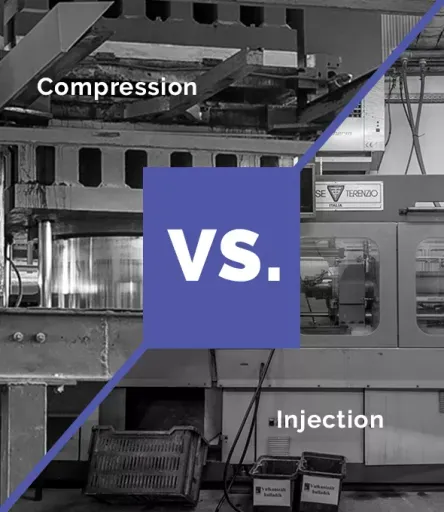
Compression Molding vs Injection Molding

Compression molding or injection molding? There is no right answer. Read our article and learn about the pros and cons of both technologies and where they might perform best.

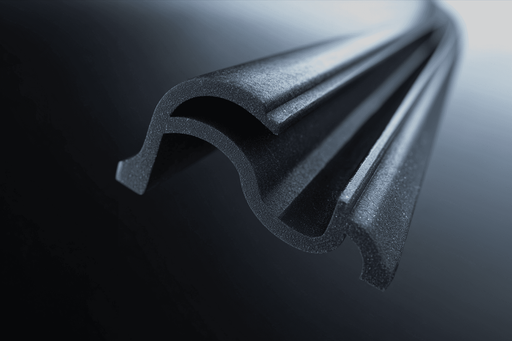
From Idea to Profile - Custom Rubber Extrusions That Seal, Protect and Perform

Rubber profiles are the quiet heroes of engineering. They keep noise out of train carriages, stop rain entering constructions, and absorb vibration on production lines. A few millimetres of perfectly-shaped rubber can decide whether a system runs for years or fails in weeks.

Location
SIC Hungary is based in Pásztó, within an hour away from Budapest providing a strategic location for multinational companies in Europe
+36 32 563 040
info@sickft.hu
HU-3060 Pásztó, Mária Tanya 2
Follow us

Connect with us on social media for exclusive updates, behind-the-scenes insights, and direct access to our team. Join the conversation and stay informed about our latest innovations.

Custom rubber parts

SIC delivers on-demand manufacturing from your design. Get in touch now to bring your ideas to life with precision and efficiency!

© 2026 SIC. All rights reserved